
Argument
Premises directed toward a logical conclusion.

タバコはマーダー · CC BY-SA 4.0
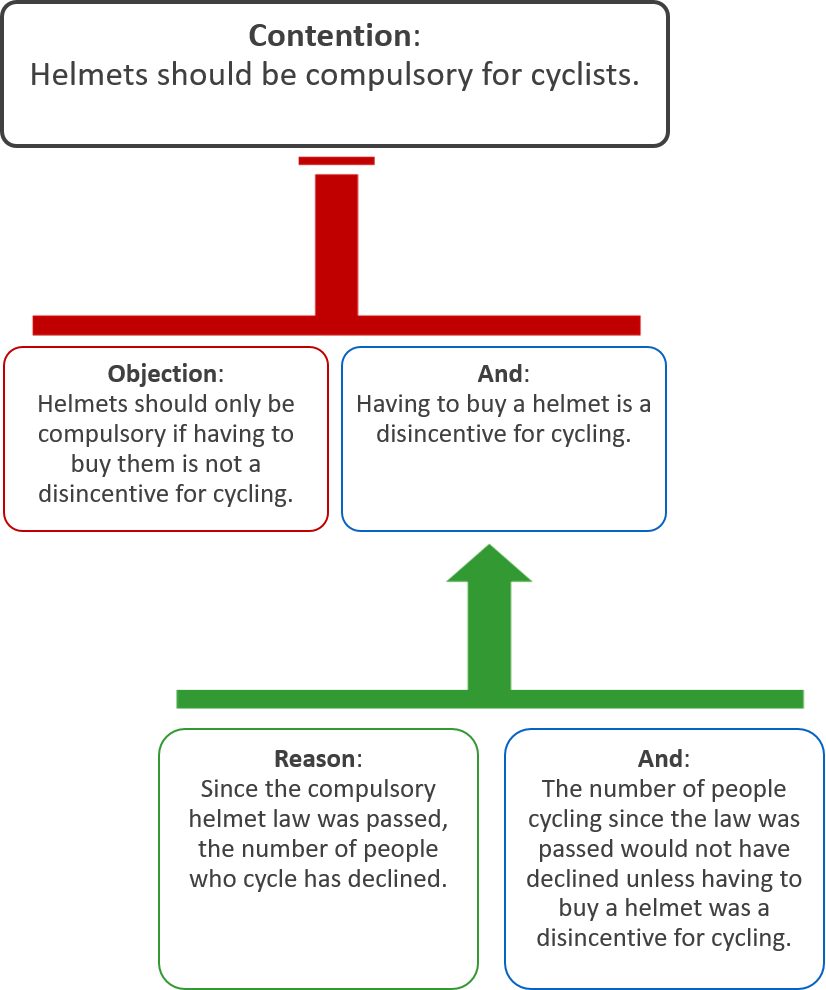
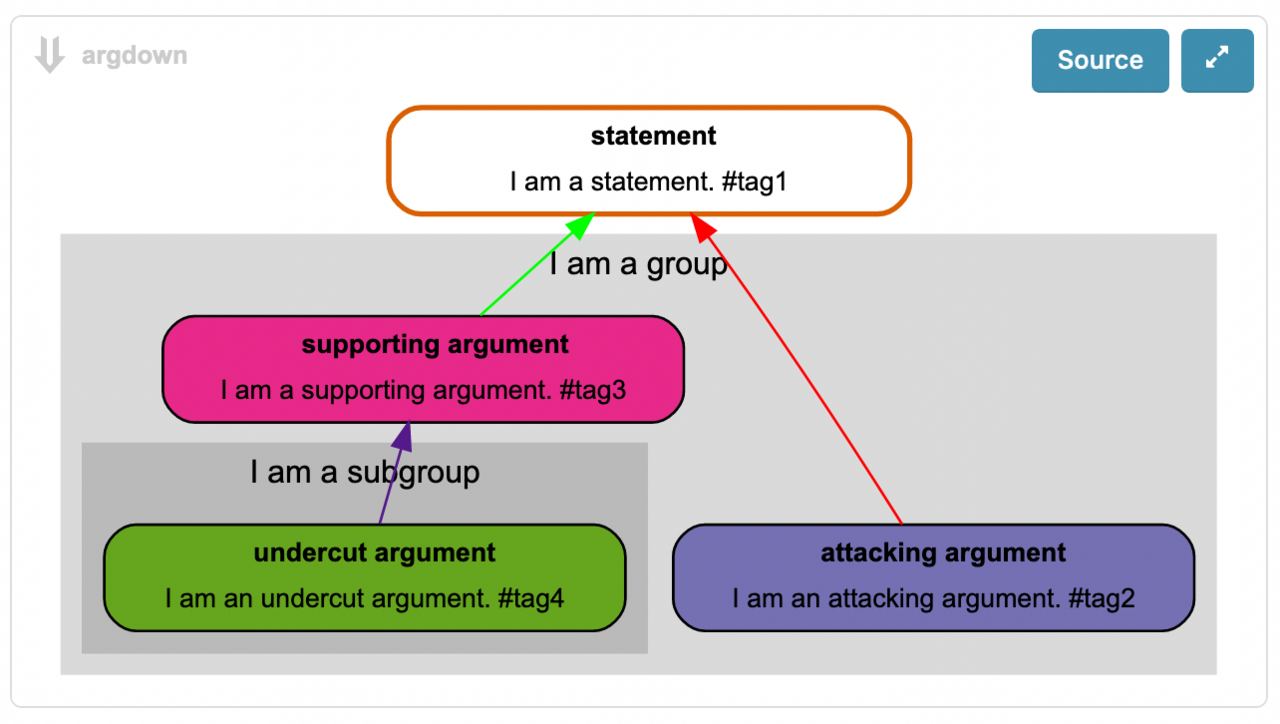
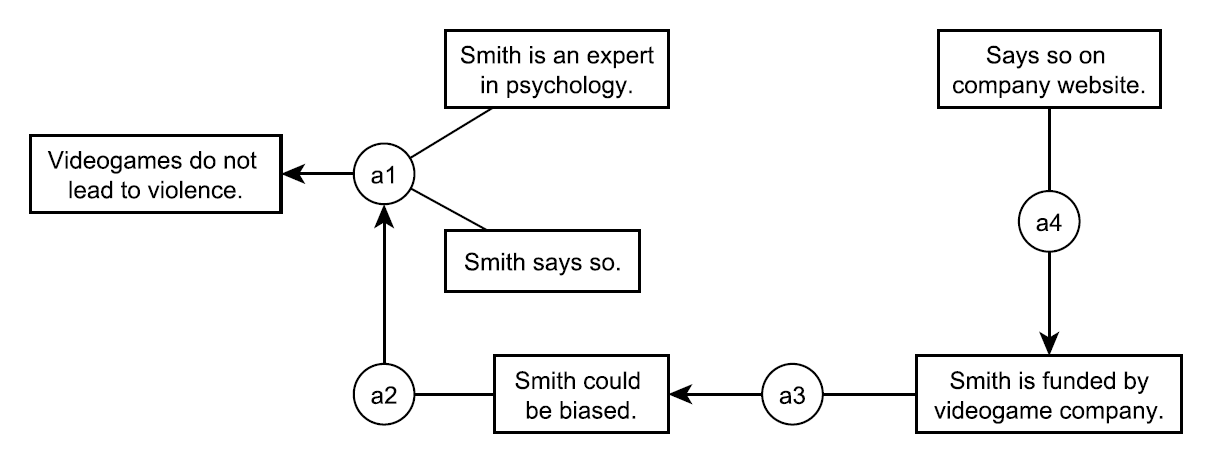
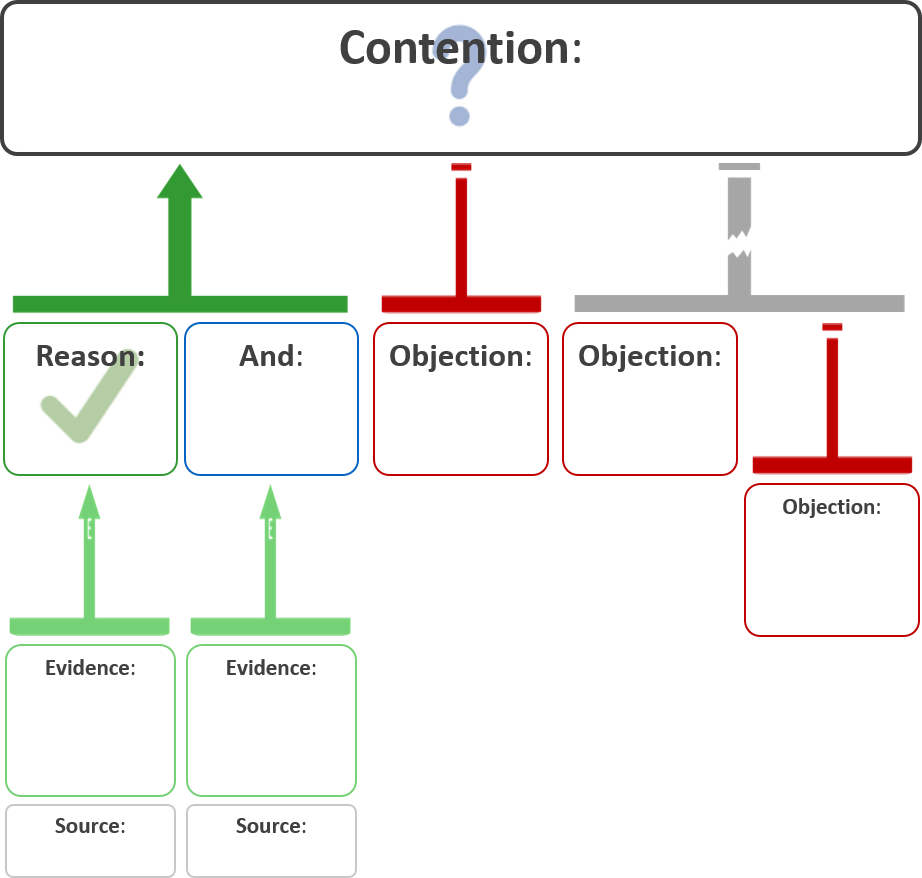
An argument is a set of one or more premises—sentences, statements, or propositions—directed toward arriving at a logical conclusion. Its purpose is to give reasons for thinking and understanding via justification, explanation, or persuasion. Arguments are studied from three main perspectives: logical, dialectical, and rhetorical.
- field
- Logic, Dialectic, Rhetoric
- known_for
- Central concept in reasoning and persuasion
- etymology
- From Latin arguere (to make bright, enlighten) and Proto-Indo-European *arg- (to shine; white)
Lore & Background
In logic, an argument is typically expressed in a symbolic formal language and defined as any group of propositions where one is claimed to follow from others through deductively valid inferences that preserve truth. Deductive arguments can be valid or invalid; valid ones can be sound if premises are true. Inductive arguments have degrees of logical strength, with stronger arguments increasing the probability that the conclusion is true. In dialectics and colloquial sense, an argument is a social and verbal means of trying to resolve a conflict or difference of opinion between parties. From the rhetorical perspective, an argument is linked to context and evaluated by an audience. Both dialectic and rhetoric use natural language, while formal logic uses formal language.
Reader's Guide
Arguments are foundational to reasoning across disciplines. In formal logic, validity depends on form rather than truth: a valid argument may have false premises and a false conclusion, but if premises are true the conclusion must be true. Soundness requires both validity and true premises. Inductive arguments are evaluated by cogency and probability. Informal arguments, studied in informal logic, are presented in ordinary language and often require explicit analysis to reveal rational structure. The study of argumentation encompasses logical implication, dialectical resolution, and rhetorical persuasion, making arguments essential to mathematics, computer science, philosophy, and everyday discourse.
Did You Know?
- The Latin root arguere means 'to make bright, enlighten, make known, prove'.
- A valid argument can have false premises and a false conclusion, yet still be valid.
- Inductive arguments have different degrees of logical strength, not absolute validity.
- In dialectic and rhetoric, arguments are used through natural language, not formal language.
The Thought Experiment at the Heart of Mind
The philosophical zombie stands as one of the most provocative constructs in the philosophy of mind. At its core, a p-zombie is a being that mirrors a conscious human in every physical respect yet harbors no inner experience whatsoever. Poked with a pin, it flinches, cries out, and retreats—yet feels nothing. It possesses what philosophers call access consciousness, the capacity to process and respond to stimuli, but is entirely devoid of phenomenal consciousness, that subjective what-it's-like quality that defines experience. This thought experiment was crafted primarily as a weapon against physicalism, the view that everything that exists is ultimately physical. Proponents like David Chalmers reason that if a physically identical copy of a conscious person can be coherently imagined without any conscious experience, then consciousness must be a further fact beyond the physical. Even Daniel Stoljar has noted that the argument need not require the absence of all subjective states; a mere subtle difference, like how coffee tastes, between two physically identical beings would suffice to challenge physicalist accounts.
From Imitation Men to Philosophical Zombies
The lineage of the zombie argument stretches further back than many realize. While the concept is most tightly linked to David Chalmers, the term zombie in this philosophical context was actually coined by Robert Kirk in 1974. Before even that, Keith Campbell had articulated a strikingly similar line of reasoning in his 1970 book Body and Mind, referring to his hypothetical figure as an imitation man. Chalmers then took the idea and developed it into its most celebrated form in The Conscious Mind (1996), where he argued that one can coherently conceive of an entire world physically indistinguishable from our own yet entirely stripped of conscious experience. He acknowledged that such zombies are probably not naturally possible under our world's laws, but insisted that their mere conceivability was enough to establish metaphysical possibility. The broader modal argument against physicalism traces back to Saul Kripke, with Thomas Nagel and Kirk advancing related versions in the early 1970s, setting the stage for Chalmers's definitive treatment.
A Debate That Refuses to Settle
Despite decades of increasingly sophisticated argumentation on all sides, the philosophical zombie debate remains remarkably unresolved. Robert Kirk, in his 2019 update to the Stanford Encyclopedia of Philosophy, observed that the arguments on both sides have grown more refined but not more persuasive, with the pull in each direction remaining strong. The critics themselves divide into distinct camps. Daniel Dennett, Nigel J. T. Thomas, David Braddon-Mitchell, and Kirk himself contend that zombies are simply not conceivable. Katalin Balog, Keith Frankish, Christopher Hill, and Stephen Yablo argue that even if zombies are conceivable, conceivability does not guarantee metaphysical possibility. George Bealer questions the logical validity of the argument altogether. A 2013 survey of professional philosophers by Bourget and Chalmers captured the division: 36% held zombies conceivable but impossible, 23% saw them as metaphysically possible, and 16% found them inconceivable. A 2020 rerun produced nearly identical numbers, confirming that the philosophical community remains deeply split.
Variations on a Theme
The philosophical zombie is not a single monolithic concept but a family of related thought experiments, each targeting a different philosophical position. A behavioral zombie is indistinguishable from a human in every outward action, a construct designed to refute behaviorism, which reduces mental states to patterns of behavior or behavioral tendencies. A neurological zombie goes further, possessing a human brain and being physiologically indistinguishable from a conscious person, thereby challenging materialism more directly. A soulless zombie simply lacks a soul, appealing to those who frame the debate in theological terms. Beyond these subtypes, related concepts enrich the landscape: a zombie world is one physically identical to ours in which no being possesses qualia; a philosophical vulcan is a conscious being whose experiences carry no valence, neither pleasant nor unpleasant; and an inverse zombie behaves as though unconscious while genuinely being conscious, a category some comatose patients might occupy. Together, these variations allow philosophers to probe consciousness from multiple angles and test the boundaries of physicalist explanation.
Gallery


Frequently Asked Questions
What is Argument?
An argument is a structured collection of one or more premises—statements or propositions—organized to lead the mind toward a logical conclusion. It is the basic building block of rational thought, used to justify beliefs, explain phenomena, or persuade an audience.
What are Argument's powers or role?
Argument serves as the engine of reasoned discourse, giving people structured grounds to think, understand, and be convinced. It operates through three distinct lenses: the logical, the dialectical, and the rhetorical.
Where does Argument's name come from?
The word traces back to the Latin arguere, meaning 'to make bright' or 'to enlighten,' which itself descends from the Proto-Indo-European root *arg-, carrying the sense of shining or whiteness. This etymology mirrors the idea that a good argument illuminates understanding.
Which fields does Argument belong to?
Argument sits at the crossroads of Logic, Dialectic, and Rhetoric, functioning as a central concept in all three disciplines. It is the shared backbone of how humans structure and evaluate reasoning and persuasion.
Why is Argument important?
Argument is the foundational mechanism through which people justify beliefs, explain the world, and influence others. Without it, structured intellectual discourse would lose its core organizing principle.
More in Philosophical Concepts 1-24
Elsewhere in the Philosophical Concepts universe
Spotted an error? Know more?
This is a living reference — every entry is fact-audited, and reader corrections feed straight into our audit queue. Suggest an edit · See this site's audit record