
Truth
Conformity to reality or fact, with disputed definition.

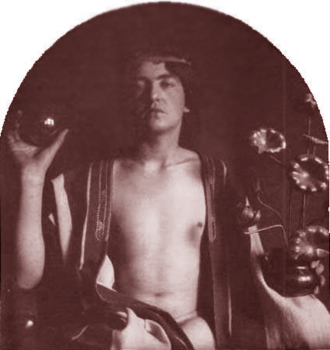
Ida Roberta Bell · CC BY-SA 4.0
Truth is a concept denoting conformity to reality or fact, often treated as a property of sentences, propositions, or beliefs. Its precise definition is contested, with various theories—such as correspondence, coherence, pragmatist, semantic, deflationary, pluralist, and relativist—offering different accounts. Truth plays a central role in the sciences, ethics, law, and journalism as a goal of inquiry and a guiding norm.
- field
- Philosophy
- known_for
- Central concept in epistemology, metaphysics, and logic; subject of multiple competing theories
Lore & Background
Discussions of truth arose in antiquity in Hindu, Jain, Buddhist, and Greek thought. In the medieval period, Christian and Islamic philosophers explored the relation between truth and God. Modern and contemporary discussions have addressed the nature of truth and its relation to thought, language, and reality. Various theories have been proposed: the correspondence theory holds that a statement is true if it corresponds to facts; the coherence theory holds that truth consists in logical consistency and mutual support among beliefs; pragmatists understand truth in terms of practical consequences and epistemic practices; the semantic theory analyzes truth conditions from the perspective of a metalanguage; deflationary theories argue that truth has no significant intrinsic nature; pluralists assert that the definition varies with the domain; relativists maintain that the same statement can be true in one perspective and false in another.
Reader's Guide
Truth is a foundational concept in philosophy and many human endeavors. It acts as a goal of inquiry in the sciences, which seek truth through observation and experimentation (empirical sciences) or deductive reasoning (formal sciences). Many religious traditions regard truth as a virtue and ground it in a divine source. Truth also serves as a guiding norm in ethics, law, and journalism. The concept is challenged by logical paradoxes such as the liar paradox, and there are discussions about additional truth values and truth value gaps. Philosophers distinguish types of truth by domain, content, and epistemic access, including a priori, necessary, moral, aesthetic, religious, and scientific truths. Truth is typically regarded as a positive value, either for its beneficial consequences or as an intrinsic good. The word truth comes from Old English trēowth, meaning 'fidelity'.
Did You Know?
- Truth is commonly treated as a property of truthbearers such as sentences, propositions, or beliefs.
- The correspondence theory holds that a statement is true if it corresponds to facts.
- The liar paradox is a logical challenge to theories of truth.
- The word truth comes from Old English trēowth, meaning 'fidelity'.
Truth in the Vast Catalogue of Ideas
The Wikipedia list of philosophical concepts presents Truth as one entry among thousands, nestled in the T section between Trust and Truth value. This placement is telling: Truth is bracketed by a concept of interpersonal reliability and by its formal logical counterpart. The list spans from A priori and a posteriori through Übermensch, encompassing ideas from every major philosophical tradition. Truth appears alongside False, Fact, Knowledge, Belief, Evidence, and Proposition, suggesting it occupies a central node in a dense web of related ideas. It sits near Logical truth, Logical consequence, and Logical possibility, indicating its deep entanglement with formal reasoning. The fact that Truth value is listed as a separate entry from Truth itself signals that philosophers distinguish between the concept and its measurable or assignable property. Within this encyclopedic sweep, Truth is neither isolated nor singular—it is one thread in an enormous tapestry of human inquiry into what can be known, what can be said, and what can be justified.
The Architecture of Reasoning and Truth
The list reveals that Truth does not float free but is embedded within a structured framework of reasoning. Three modes of inference appear: deductive reasoning, inductive reasoning, and abductive reasoning, each aspiring toward or operating upon truth in distinct ways. The logical constants, logical forms, and logical possibilities listed nearby suggest that Truth possesses a formal, structural dimension analyzable independently of its content. The Problem of induction and the Münchhausen trilemma appear as challenges to how we ground truth claims, while Deductive reasoning and Logical consequence represent the mechanisms by which truth propagates from premise to conclusion. Epistemic justification, Epistemic possibility, and Epistemic virtue form a cluster around the conditions under which a truth claim can be responsibly made. Even the entries I know that I know nothing and Ignoramus et ignorabimus sit in this landscape, reminding us that the pursuit of truth is perpetually shadowed by the acknowledged limits of human cognition.
Truth Across Philosophical Traditions
The list makes visible that Truth is not the exclusive property of any single tradition. It appears alongside concepts from Indian philosophy—Atman, Brahman, Dharma, Karma, Moksha, Satchidananda, Satori, and Sunyata—just as readily as it appears beside Cogito ergo sum, the Categorical imperative, and the Kingdom of Ends from the Western canon. Sapere aude and Dharma both orbit the territory where truth intersects with moral and spiritual life. Logos, Prakriti, Purusha, and Shakti suggest that different traditions frame the relationship between truth and reality in fundamentally different vocabularies. The presence of Darshana, Kala, Kalachakra, and Trailokya alongside Ontology, Metaphysics, and Substance theory indicates that the question of what truth is, and what it is true about, has been pursued across cultures with diverse conceptual tools. In this catalogue, Truth is a universal human concern expressed in many local languages.
The Thought Experiments That Test Truth
The list contains a striking cluster of scenarios designed to stress-test our assumptions about truth and knowledge. The Brain in a vat, the Evil demon, the Experience machine, and the Simulated reality, alongside the Simulation hypothesis, all pose radical challenges: if all experience could be fabricated, what grounds do we have for claiming truth about the external world? The Gettier problem and the Hard problem of consciousness represent more targeted philosophical puzzles that complicate the relationship between justified belief and genuine truth. The Ring of Gyges and Theodicy push truth into the moral and theological registers, asking whether truth can be separated from power or from the problem of suffering. Teletransportation paradox and Philosophical zombie further probe whether truth about personal identity or consciousness is even coherent. These thought experiments, listed among the same alphabetical entries as Trust and Type, suggest that Truth is not a settled datum but a concept perpetually under siege by imagination and analysis.
Gallery




Frequently Asked Questions
Who is Truth?
Truth is the philosophical concept describing how a statement, belief, or proposition lines up with the way things actually are in the world. It sits at the intersection of epistemology, metaphysics, and logic, and its exact nature remains one of philosophy's most hotly debated questions.
What are Truth's powers and role?
Truth functions as the guiding norm for scientific inquiry, legal reasoning, ethical deliberation, and journalistic practice, giving each field a standard to aim toward. It also serves as the connective tissue between language and reality, anchoring propositions to the facts they purport to describe.
How does Truth's story end?
Truth has no single denouement; its definition is still actively contested, with correspondence, coherence, pragmatist, semantic, deflationary, pluralist, and relativist camps each claiming a different account. The narrative is ongoing, with new proposals emerging as philosophers refine what it means for a claim to be true.
Why is Truth important?
Without a shared notion of truth, scientific claims, legal verdicts, moral arguments, and news reporting would lack a common benchmark for accuracy. It underpins the entire enterprise of knowledge by giving inquiry both a direction and a standard of success.
What are Truth's main rival interpretations?
The major competing accounts include correspondence (truth as matching reality), coherence (truth as consistency within a system), pragmatist (truth as what works), semantic, deflationary, pluralist, and relativist frameworks. Each camp argues its version captures what Truth actually is, leaving the concept's identity perpetually unsettled.
More in Philosophical Concepts 25-28
Elsewhere in the Philosophical Concepts universe
Spotted an error? Know more?
This is a living reference — every entry is fact-audited, and reader corrections feed straight into our audit queue. Suggest an edit · See this site's audit record